

Short Films
Bringing narrative to motion
Cinematic glimpses of memory, emotion, and imagination.
Every film, frame, and sequence reveals the art of storytelling through perspective and light.
It’s a space where story becomes experience, and every scene feels alive.

SUNDANCE
FINAL WEEK
Next year’s indie films are being decided now.
This week determines which independent films reach wide audiences later this year.
MUSE.TV Daily — Film
Sean Baker to Debut New Short Film Sandiwara with Michelle Yeoh Through self-portrait Residency
Indie auteur and Academy Award winner Sean Baker is bringing his filmmaking into fashion-film territory with Sandiwara, a new short starring Michelle Yeoh and created as part of self-portrait’s Residency program in Penang, Malaysia.
Baker wrote, shot, and edited the film himself — a fully hands-on approach that tracks with a career built on independence and sharp human storytelling. Sandiwara stars Malaysian-born, Academy Award–winning actress Michelle Yeoh and is set to premiere in February 2026.
The project was produced through self-portrait’s Residency initiative, a cross-disciplinary program that invites independent creatives across art, fashion, architecture, entertainment, and culture to experiment and build work in a limited-time collaborative setting. For this chapter, Baker and his team immersed themselves in Penang, drawing from the textures, rituals, and everyday moments of Malay culture.
Baker describes Sandiwara as an extension of his love for independent cinema, made possible through the creative freedom of the Residency and the team behind it. self-portrait founder and creative director Han Chong calls the collaboration a natural match, pointing to Baker’s self-reliant filmmaking spirit and the Residency’s mission to support risk-taking, authentic creative dialogue, and cultural exchange.
More details about Sandiwara are expected ahead of its February 2026 release.
Why MUSE is watching: Baker’s move into a fashion residency signals a widening lane for short-form cinema — where fashion houses aren’t just funding projects, they’re helping shape them. With Yeoh at the center and Penang as the setting, Sandiwara looks positioned to spotlight Malaysian culture through a global, independent lens.
Release window: February 2026
Categories: Film • Life • Performance
Source: self-portrait
ELLY CHO - Interview
Award-Winning Visual Artist & Filmmaker
Exploring the intersection of nature, environment, and human behavior across painting, film, and performance.

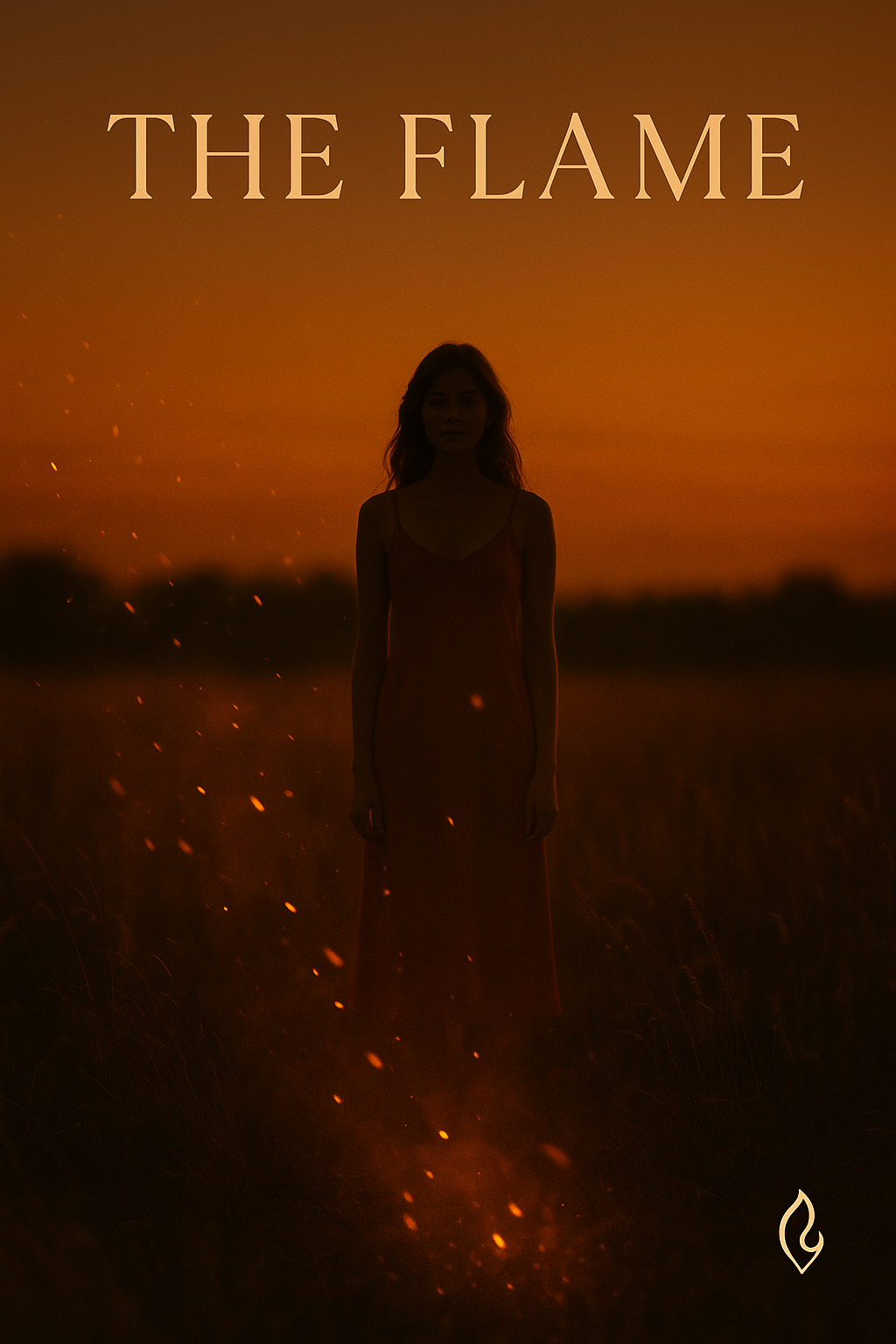
🔥The Flame
A Cinematic Short Story by MUSE.TV
She didn’t run from the fire.
She became it.
The Flame is a quiet ignition — the moment before becoming.
Set in a field of embered light and rising wind, this short film follows a woman walking not away from the fire, but with it — wrapped in stillness, marked by memory.
This is not a beginning.
It is a return.
She did not flee the fire.
She stepped toward it — slowly, without fear.
Not to be burned, but to remember.
The dusk held its breath as she emerged — a silhouette wrapped in wind and linen, framed by a low-burning light. There was no urgency in her steps. Only rhythm. Only reverence.
The golden field behind her whispered of past lives and future calls. The air shimmered, not with heat, but with memory. This wasn’t destruction. It was invitation.
The fire did not roar. It hummed. A quiet presence at her back, as if it knew it had been waiting not to consume, but to be seen.
With every step, her breath deepened. Her body softened. Her soul stirred.
This was the First Flame.
Not the beginning of a story — but the return to one.
She paused just long enough for the wind to catch her robe. Then she walked on.
Not away from the fire.
With it.
As it.
✧ The Flame
This is not a fire that consumes.
It’s the warmth that calls you forward.
There are sparks that shout —
and others that glow quietly until you’re ready.
This flame is not for show.
It’s for becoming.
Not destruction — but ignition.
We speak of change like it must be sudden.
But beginnings often arrive in silence —
soft ground, golden air,
a pulse beneath the skin.
This is that moment.
You don’t need to roar to rise.
You only need to listen
for the heat within.
Let this be your permission —
to move gently,
to begin again.

✧ The Soundtrack
1. Emberlight
The Moment the Flame Begins
2. Dusk Bloom
Where Softness Holds Strength
3. Kindling Air
Breath, Pause, and the Spark Between
4. Through the Quiet Veil
Steps Taken Without Sound
5. Flicker/Become
The Dance of Hesitation and Rise
6. The Warmth Within Reach
A Return to What Was Always There
She Carries the Cosmos
A MUSE Journal Visual Offering
Wrapped in velvet light and guided by unseen stars, She Carries the Cosmos is a cinematic meditation on quiet power, presence, and the feminine force that shapes without shouting.
She does not chase light—
she remembers she was made from it.
With hair like stardust and a gaze that sees through time,
she moves through the world as if she’s lived it all before.
Not loud. Not hurried.
A presence—etched in silence, dressed in velvet.
She Carries the Cosmos is a cinematic meditation on the woman who lives between realms—who doesn’t follow seasons, she is the season.
This short film is part of MUSE Journal’s Summer Series:
a constellation of visual stories exploring beauty, softness, sovereignty, and the divine.
✧ Lifestyle Notes
Shot in velvet light and cosmic tones, this piece weaves together timeless fashion, glowy skin, and the aura of a modern muse.
Everything is intentional. Soft layers. Bare shoulders. Jewelry that feels like an heirloom from another universe.
—
✦ Featured Elements
Wardrobe: Ethereal draping, sheer textures, celestial silhouettes
Beauty Direction: Luminous skin, rose-lit blush, soft shimmer highlight
Mood: Dreamy, slow, magnetic—like the space between inhale and exhale
Ideal Pairings: Ambient music, moon rituals, silken loungewear, gold-framed mirrors
—
☽ Watch. Breathe. Remember Who You Are.
This is not just a film. It’s a reflection.
For the woman who carries stars in her spirit and doesn’t need to be seen to be known.

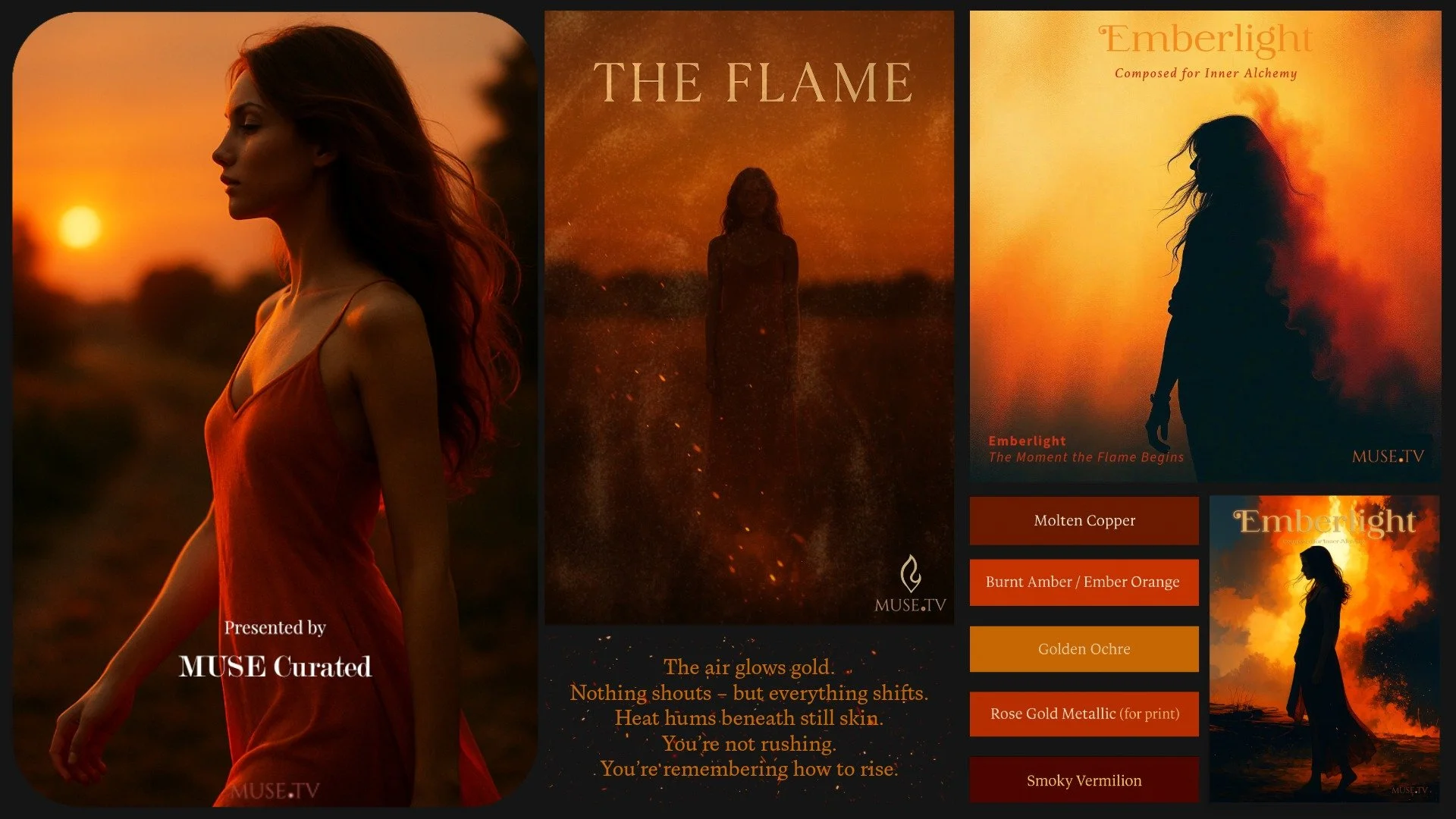
✦ Compositions by MUSE.TV
Where cinema becomes design
Each Composition is crafted as a living moodboard — arranged in light, shadow, and sound. Designed to immerse, they evolve beyond still images into cinematic experiences that linger long after the frame.
-

The Flame
Born of shadow and spark.
A cinematic moodboard of allure, intensity, and firelight energy.
-

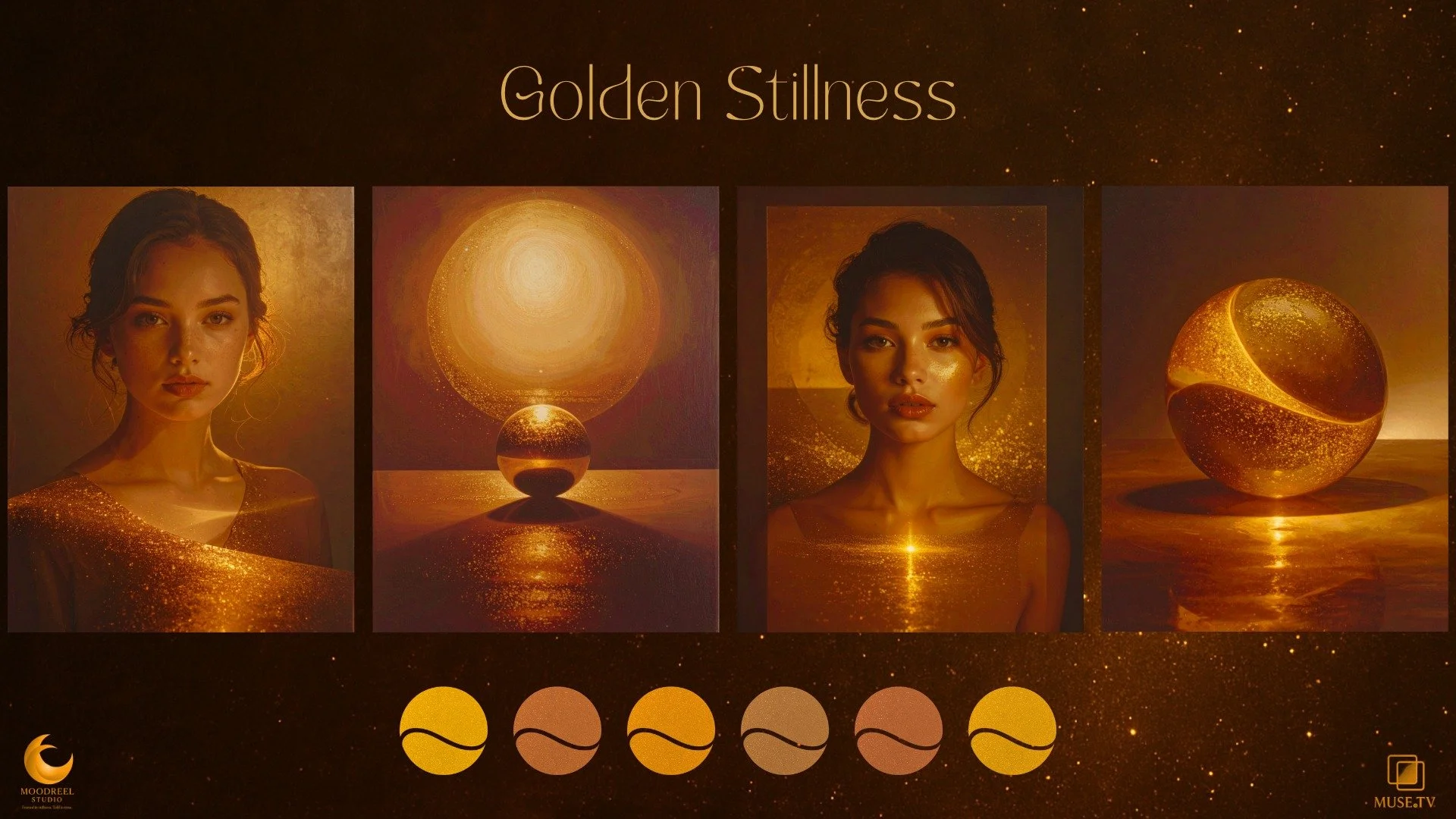
Golden Stillness
Where silence glows.
A meditation in light — frames that linger, shimmer, and stay.
-

Autumn City Lights
Neon over falling leaves.
A cinematic ode to the season where urban glow meets autumn’s hush.


MUSE.TV
“Mirage Queen”
Festival Series

The Crystal Sovereign’s Descent
(Part 1 of 5 in the “Mirage Queen” Series)
The desert held its breath as she appeared, a vision carved from starlight and glass. Her crown, a mosaic of sapphire and moonstone, refracted the dying sun into a thousand prismatic shards. The sands shimmered beneath her, as if bowing to her arrival.
She was no mere traveler. Her mirrored lenses, catching the horizon’s fire, seemed to peer through the veil of reality itself. The golden dunes whispered her titles—Sovereign of Shattered Light, Weaver of Mirage—though none dared speak them aloud. Her necklace, heavy with ancient gold and a single turquoise heart, pulsed with a rhythm older than the mountains that framed the sky.
The festival awaited her, its tents aglow with lantern light, its music a distant hum. But she stood still, her crystalline veil fluttering like wings of a phantom bird. She heard it first—the melody beneath the melody, a song woven into the desert’s bones. It called to her, and she answered with a step, her bare feet leaving no trace on the sand.
Tonight, the Mirage Festival would awaken.
Tonight, the desert would sing.
And she, the Crystal Sovereign, would lead its chorus—until the dawn stole her away, as it always did, into the light from which she came.
Part 2 >

Dance of the Celestial Veil
(Part 2 of 5 in the “Mirage Queen” Series)
The first note of the festival’s drums echoed across the dunes, a heartbeat that stirred the floating orbs above. They pulsed with light—turquoise, amethyst, gold—casting a celestial glow over the sands. The crowd, draped in silks and starlight, turned as one to the center of the gathering, where she stood.
The Desert Siren’s crystalline veil shimmered with every step, refracting the orbs’ light into a kaleidoscope of colors. Her mirrored lenses caught the reflections, and through them, she saw the threads of the universe itself—woven into the music, the sand, the sky. The jewels in her crown hummed louder now, resonating with the cosmic rhythm.
She began to dance.
Her movements were liquid starlight, each gesture pulling at the fabric of the night. The orbs above trembled, their glow intensifying as if drawn to her. The crowd felt it too—a vibration beneath their feet, a song beyond hearing. Her necklace, heavy with its turquoise heart, glowed with an inner fire, channeling the energy of the desert’s ancient magic into her steps.
With a sweep of her arm, the sands rose, swirling into patterns that mirrored the constellations. With a turn, the floating orbs descended, orbiting her like planets around a sun. She was no longer just the Siren of the Mirage—she was its conductor, its creator, its queen. The music bent to her will, weaving a melody that spoke of forgotten worlds and unseen skies.
But as the dance reached its crescendo, a shadow flickered in her lenses—a warning from the stars. Something stirred in the void beyond the orbs, something that had heard her song. The festival was hers, but the night was not yet done with its secrets.
Tomorrow, she would vanish, as she always did.
But tonight, the cosmos danced with her—and it would not forget.
Part 3 Reveal

The Crescent’s Call
(Part 3 of 5 in the “Mirage Queen” Series)
The final note of her dance lingered in the air, a shimmering thread that tethered the festival to the stars. The floating orbs, still orbiting the Desert Siren, dimmed as the crescent moon rose, its surface a mosaic of fractured light. She tilted her head, the crystalline hat atop her head catching the moon’s glow, its feather-like shards pulsing with colors—emerald, violet, flame.
The crowd stood in reverent silence, their breaths visible in the cooling desert air. They had witnessed the impossible: sands that danced, stars that bowed, a melody that wove the night into something alive. But the Siren’s mirrored lenses reflected more than their awe. They showed her the shadow from her dance—a presence stirring beyond the crescent, drawn by the cosmic song she had unleashed.
She stepped forward, her iridescent gown trailing behind her like liquid glass. The necklace at her throat, its turquoise heart now blazing, hummed with a new urgency. The crescent moon was no mere celestial body—it was a gateway, a call. And she, the Siren of the Mirage, was its key.
Her hat’s shards began to vibrate, each one singing a note of the desert’s ancient magic. The moon responded, its light bending into a beam that bathed her in prismatic hues. The crowd gasped as her form shimmered, her veil lifting as if caught in an unseen wind. For a moment, she was more than a queen—she was a conduit, a bridge between the sands and the void.
But the shadow grew closer, its whispers now audible in the silence. It spoke in a tongue older than the dunes, a warning and a promise. The festival had awakened something it could not contain. The Siren lowered her gaze, her lenses reflecting the crescent’s fractured light. She had danced for the desert, for the stars—but now, she would answer the moon’s call.
Tomorrow, she would vanish, as always.
But tonight, the crescent claimed her—and the festival would never be the same.
Part 4 Reveal

Echoes of the Mirage
(Part 4 of 5 in the “Mirage Queen” Series)
The festival awoke to a changed dawn. The tents, once vibrant with lantern light, now shimmered with an otherworldly sheen, as if kissed by the stars the Desert Siren had summoned. The crowd gathered at the edge of the dunes, their murmurs rising like a tide. They had seen her dance, felt the sands shift, watched the crescent moon claim her—but now, they saw the aftermath.
She stood at the festival’s heart, her crystalline gown catching the first rays of sunlight, scattering them into a prism of colors across the sand. Her necklace, its turquoise heart still glowing faintly, pulsed with the echoes of the cosmic song she had woven. The intricate headpiece, a geometric shard of light, gleamed atop her flowing hair, a reminder of the celestial forces she had invoked.
The people of the Mirage Festival looked to her, their eyes wide with awe and fear. The air still hummed with the melody she had drawn from the desert’s bones, but it was fractured now, laced with a dissonance that made the mountains tremble. The shadow she had glimpsed in her mirrored lenses—the one the crescent moon had warned her of—had grown closer. Its whispers seeped into the festival, a low, chilling chant that spoke of hunger and void.
She turned to the crowd, her gaze steady behind her reflective lenses. They called her the Siren of the Mirage, the Weaver of Starlight, the Queen of the Sands. But now, they needed more than her dance—they needed her protection. The festival’s magic, once a celebration, had become a beacon, drawing the shadow from beyond the stars.
The Desert Siren raised her arms, her gown shimmering like a second sky. The sands responded, swirling into a protective barrier around the tents. The crowd held its breath as the dissonance grew louder, the shadow’s presence pressing against the edges of the festival. She knew she could not stop it—not yet. But she could hold it at bay, for one more night.
Tomorrow, she would vanish, as she always did.
But tonight, the festival needed its queen—and the shadow would learn her name.
Part 5 Reveal
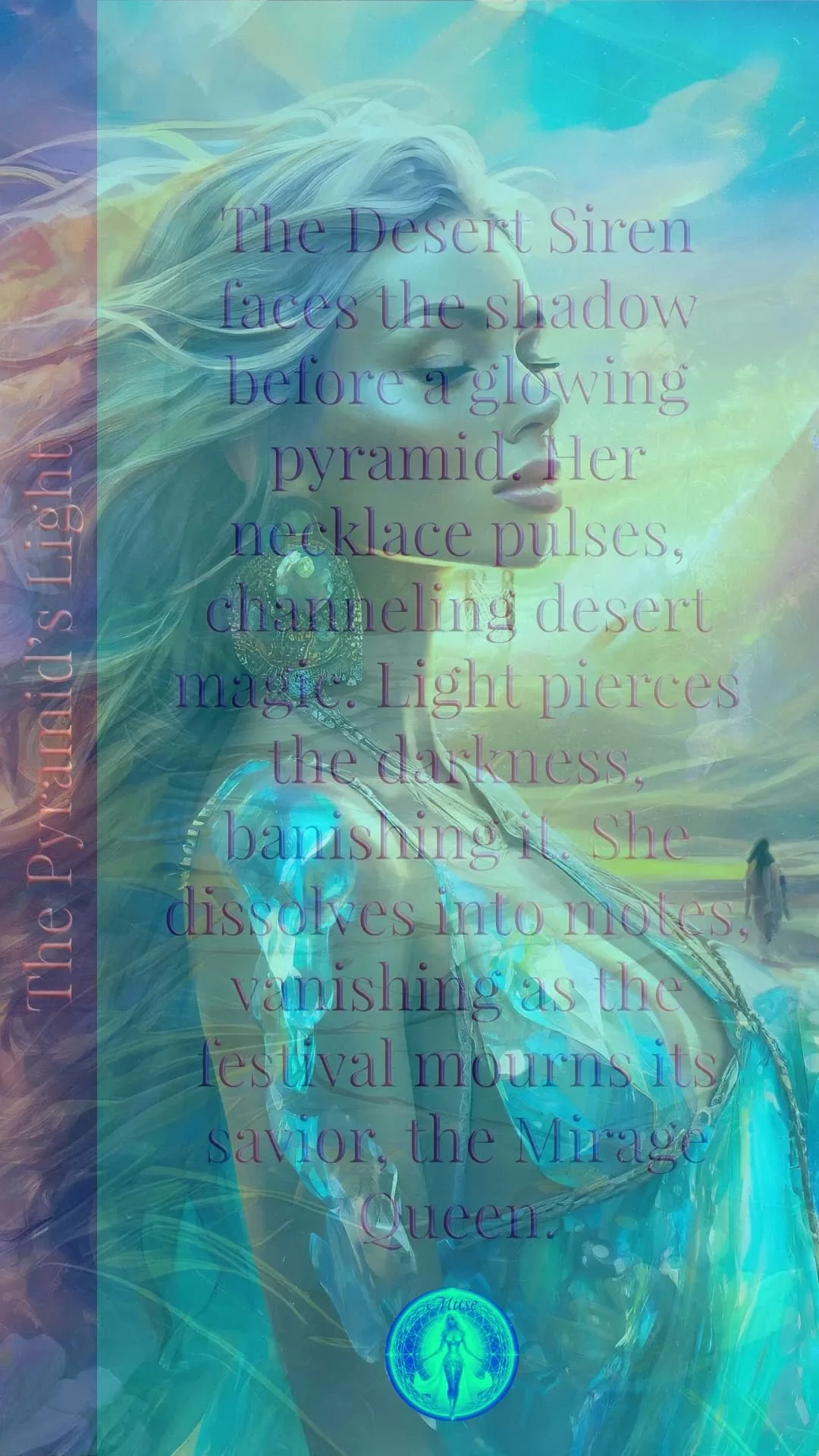
The Pyramid’s Light
(Part 5 of 5 in the “Mirage Queen” Series)
The dawn broke with a golden fire, illuminating the ancient pyramid that loomed over the Mirage Festival. Its apex glowed, a beacon of light that mirrored the turquoise heart of the Desert Siren’s necklace. She stood at the edge of the dunes, her crystalline gown shimmering like a frozen wave, her hair whipping in the desert wind. The travelers in the distance paused, their silhouettes small against the pyramid’s grandeur, watching her with a mixture of reverence and dread.
The shadow from the void, the one she had held at bay, now loomed over the festival, its form a writhing mass of darkness that swallowed the stars. Its whispers had become a roar, demanding the magic she had awakened. The festival’s tents trembled, the sands quaked, and the crowd looked to her—their Siren, their Queen—for salvation.
She stepped forward, her mirrored lenses reflecting the pyramid’s light. The necklace at her throat pulsed, its rhythm syncing with the glow of the ancient structure. The pyramid was no mere monument—it was a relic of the desert’s magic, a seal against the void. And she, the Siren of the Mirage, was its final guardian.
With a gesture, she summoned the melody she had woven through the festival—the song of the sands, the stars, the crescent moon. Her gown flared with prismatic light, and the pyramid responded, its light intensifying into a beam that pierced the shadow. The darkness screamed, its form unraveling as the desert’s magic surged through her, channeled by the relic’s power.
The crowd shielded their eyes as the light enveloped her, her form becoming a silhouette of pure radiance. The shadow was banished, the festival saved—but the cost was clear. Her time in this world was over. The pyramid’s light faded, and with it, the Desert Siren began to dissolve, her crystalline form scattering into motes of light that drifted toward the horizon.
The travelers watched as the last of her essence vanished, carried by the wind to the stars. The festival was silent, the sands still. She had come, she had danced, she had fought—and now, she was gone. But the pyramid glowed softly, a testament to her sacrifice, and the Mirage Festival would forever sing of the queen who saved it.

Electric Muse
Where sound becomes light.
In Electric Muse, sound transcends form — pulsing through color, reflection, and rhythm.
What begins as vibration becomes vision: an aura of motion and melody that blurs the line between music and art.
A cinematic meditation on energy, emotion, and the unseen frequencies that move us.