
Interviews with Kindred Creators
Cinematic, multimedia conversations with artists, musicians, and makers shaping contemporary culture.
View The Latest Interviews →
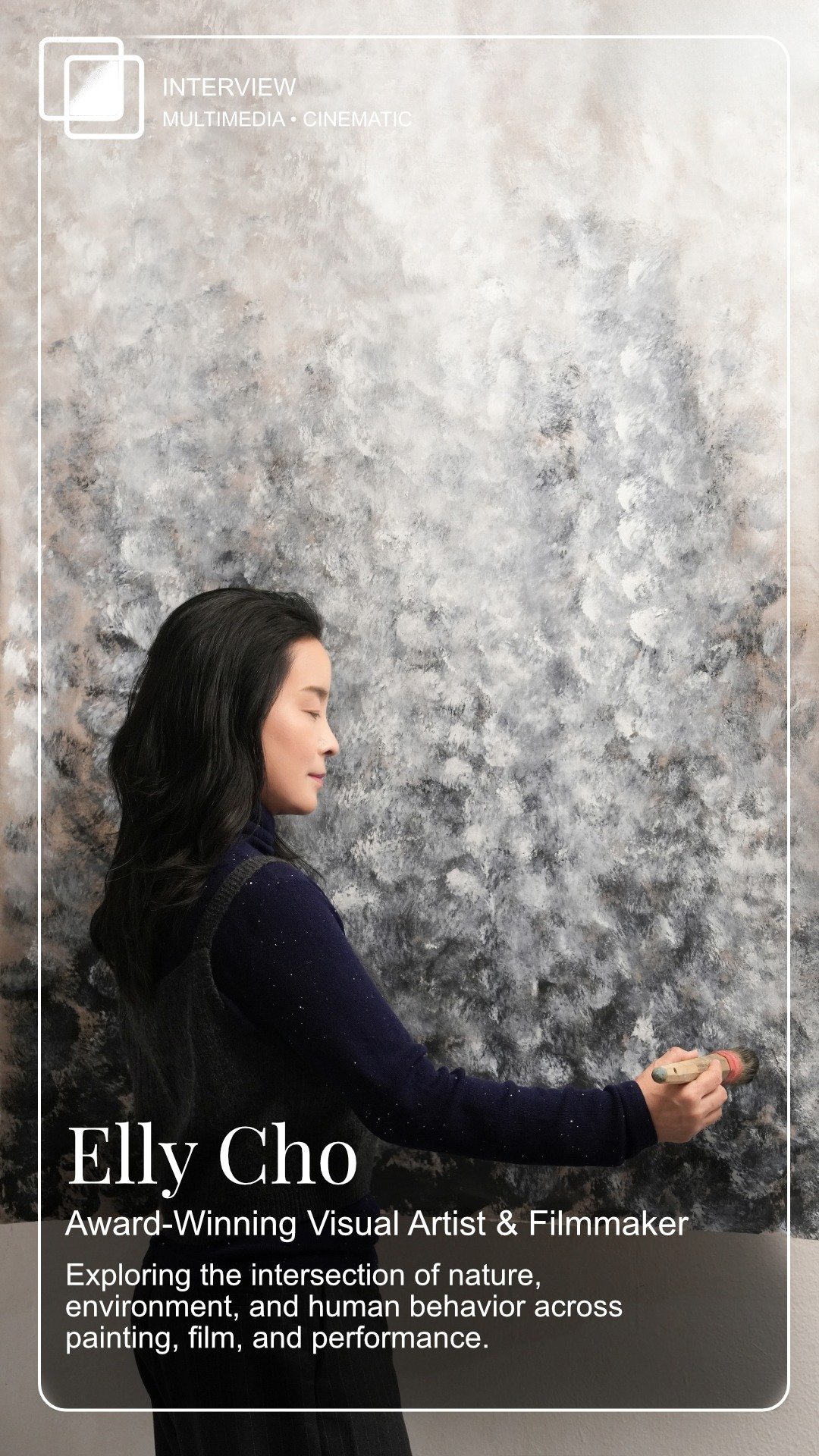
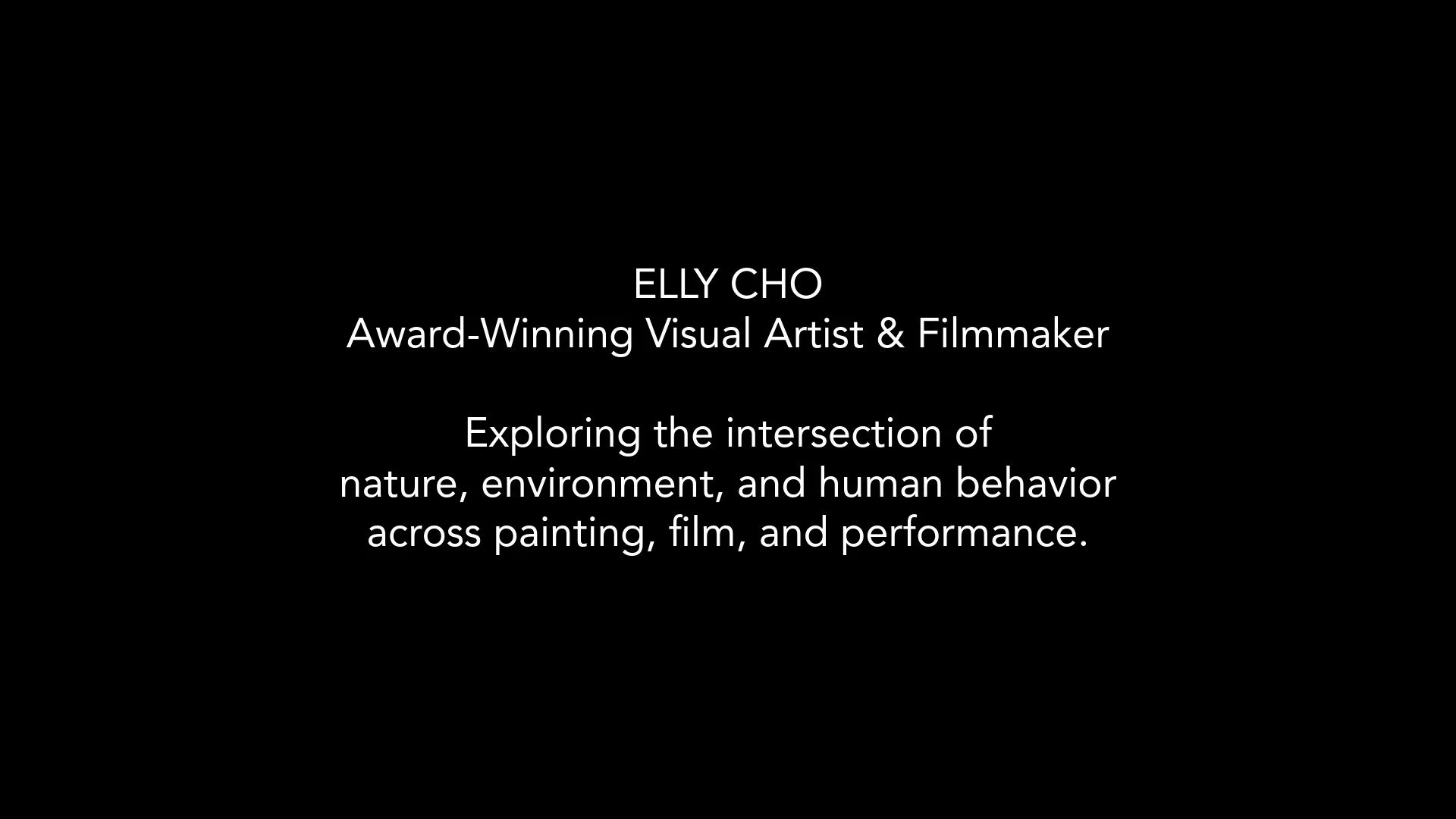
ELLY CHO - Interview
Award-Winning Visual Artist & Filmmaker
Exploring the intersection of
nature, environment, and human behavior
across painting, film, and performance.
“The porous rock, shifting wind patterns, and seasonal changes — alongside the stark contrast between urban Seoul and Jeju’s elemental nature — left a strong imprint on how I understand memory.”
1. What early landscape or memory first shaped your way of seeing — and how does it continue to shape your ecological approach today?
I grew up moving between Seoul and various natural landscapes, but I was especially affected by the raw materiality of Jeju Island’s volcanic terrain. The porous rock, shifting wind patterns, and seasonal changes — alongside the stark contrast between urban Seoul and Jeju’s elemental nature — left a strong imprint on how I understand memory. For me, memory is not something stored, but something held in the body and land, expressed through material, movement, and visual narrative.
That early experience taught me to listen through texture, silence, and repetition — a way of seeing that continues to guide how I approach ecological fieldwork today.
“What’s most alive for me now is the possibility of working across these worlds — human, nonhuman, and algorithmic — to explore how memory, sensation, and intelligence might be reimagined together.”
2. Your work spans desert systems, coastal environments, pigment processes, and AI-generated imagery. What draws these worlds together for you?
I’m drawn to materials that carry memory — pigment, salt, breath — elements that feel alive and responsive. These landscapes, whether desert or coastal, feel like thresholds: they echo the body’s own cycles of erosion, rhythm, and transformation. I often approach these places as sensorial collaborators — spaces that move and hold memory in ways that go beyond language.
My previous film Climate Hybrids explored speculative ecosystems shaped by water, migration, and adaptation. That project deepened my interest in ecological storytelling through movement, mythology, and evolving species. In Desert Futures, I continue this thread by shifting focus to the desert — not as barren, but as a site of reimagination, where ecological time, human gesture, and machine perception begin to entangle.
Rather than separating technology and nature, I’m interested in how they might reflect each other. AI in my work doesn’t aim to simulate nature, but to echo it — to listen, respond, and perhaps absorb its rhythms. These connections are still evolving. What’s most alive for me now is the possibility of working across these worlds — human, nonhuman, and algorithmic — to explore how memory, sensation, and intelligence might be reimagined together.
“The choreography was born from both emotional memory and environmental tension — particularly the internal contradictions of being between fantasy and reality.”
3. How do you experience the relationship between ecological research and personal memory when you’re creating?
For me, ecological research is not just external — it becomes deeply embodied and personal. When I begin a project, I don’t separate scientific exploration from lived experience. I enter the landscape through touch, movement, and observation. The way pigment shifts in salt air, or how breath echoes in a cavernous space — these sensory cues often unlock memory.
In my work, personal memory doesn’t stay in the background — it becomes material. A gesture from childhood, a visual from a recurring dream, or the shape of breath under water might resurface and form the seed of a scene. In my silent film sum(Island), I explored themes of isolation and self-discovery through movement, drawing from my experiences living on islands like Jeju, Manhattan, and London. The choreography was born from both emotional memory and environmental tension — particularly the internal contradictions of being between fantasy and reality.
This process continued in Climate Hybrids, where I used AI and choreography to reimagine evolutionary futures. Though rooted in scientific dialogue about adaptation and climate change, the film was shaped by my bodily memory and cultural imagination. The dancers’ movements embodied hybrid species, but also mirrored psychological states, ancestral echoes, and speculative longing.
So for me, ecological research and memory co-create one another. Memory brings intimacy to data, and research lends form to memory. Together, they shape how I build visual worlds — fragmented, rhythmic, and responsive to the emotional life of both land and body.
“It’s not about simulating nature, but creating dialogues between material intelligence and digital perception — a space where pigments and code both carry memory.”
4. What does your working process feel like — the rhythms, cues, or sensory details that guide you?
When a new idea arrives, I often begin with painting — it’s how I first externalize a feeling or visual logic. Painting becomes a way of thinking through form, and during the development of a body of work, it grows alongside the film. I think of it almost like set design or scenography in dialogue with narrative: a conversation between pigment and memory, between material and moving image.
My process is intuitive, rhythmic, and often physical. I work through movement, pigment, and listening — not only to sound, but to how materials behave. I might begin by walking a
coastline, collecting soil or color, observing how it reacts to light or water. These gestures accumulate into layered forms: performance, image-making, and sound.
I think of it as a kind of ecological choreography — not imposed, but responsive.
At the same time, my practice is evolving to include collaborations that translate these sensory experiences into other languages — ones that are not strictly visual or verbal. I’m working with systems that interpret memory, breath, and rhythm through computational means — using tools that mirror how the body feels, rather than just how it appears.
This allows the work to exist in dual dimensions: tactile and algorithmic, grounded and speculative. It’s not about simulating nature, but creating dialogues between material intelligence and digital perception — a space where pigments and code both carry memory.
“This translation between lived experience and speculative space is central to how I work.”
5. Many of your pieces move through dreamlike cultural landscapes. What draws you to these liminal spaces?
I’m drawn to places that hold emotional memory from my life — Seoul, Jeju Island, London, and New York. These locations shape how I perceive space and time. My work often reflects moments of personal significance, but those memories take on a dreamlike quality — layered with desire, imagination, and the unconscious.
This translation between lived experience and speculative space is central to how I work. I’m interested in environments where memory, loss, and transformation coexist — where what’s visible is shaped by what’s absent. In upcoming projects, I explore landscapes like abandoned architectures, submerged coasts, and desert ruins — places that feel suspended between histories.
These in-between zones allow the poetic and political to converge. They’re fragile, haunting, and speculative — and that’s where I feel most connected creatively.
“What feels most urgent is reclaiming how we store and transmit memory — especially in a time of ecological crisis and AI acceleration. I’m interested in what it means to create an alternative dataset — not based on surveillance or optimization, but on pigment, breath, and ecological rhythms.”
6. With upcoming projects exploring climate futures and hybrid ecologies, what feels most urgent or alive in this moment of your practice?
What feels most urgent is reclaiming how we store and transmit memory — especially in a time of ecological crisis and AI acceleration. I’m interested in what it means to create an alternative dataset — not based on surveillance or optimization, but on pigment, breath, and ecological rhythms. Desert Futures is my attempt to imagine a future in which land holds intelligence — where AI doesn’t overwrite memory, but listens to it. What feels alive now is the possibility of building systems of knowledge that are material, embodied, and deeply relational.
ELLY CHO
Visual Artist & Filmmaker
Interview
Land holds memory. The body listens.
https://www.ellycho.com/
https://www.instagram.com/choelly/
© MUSE.TV
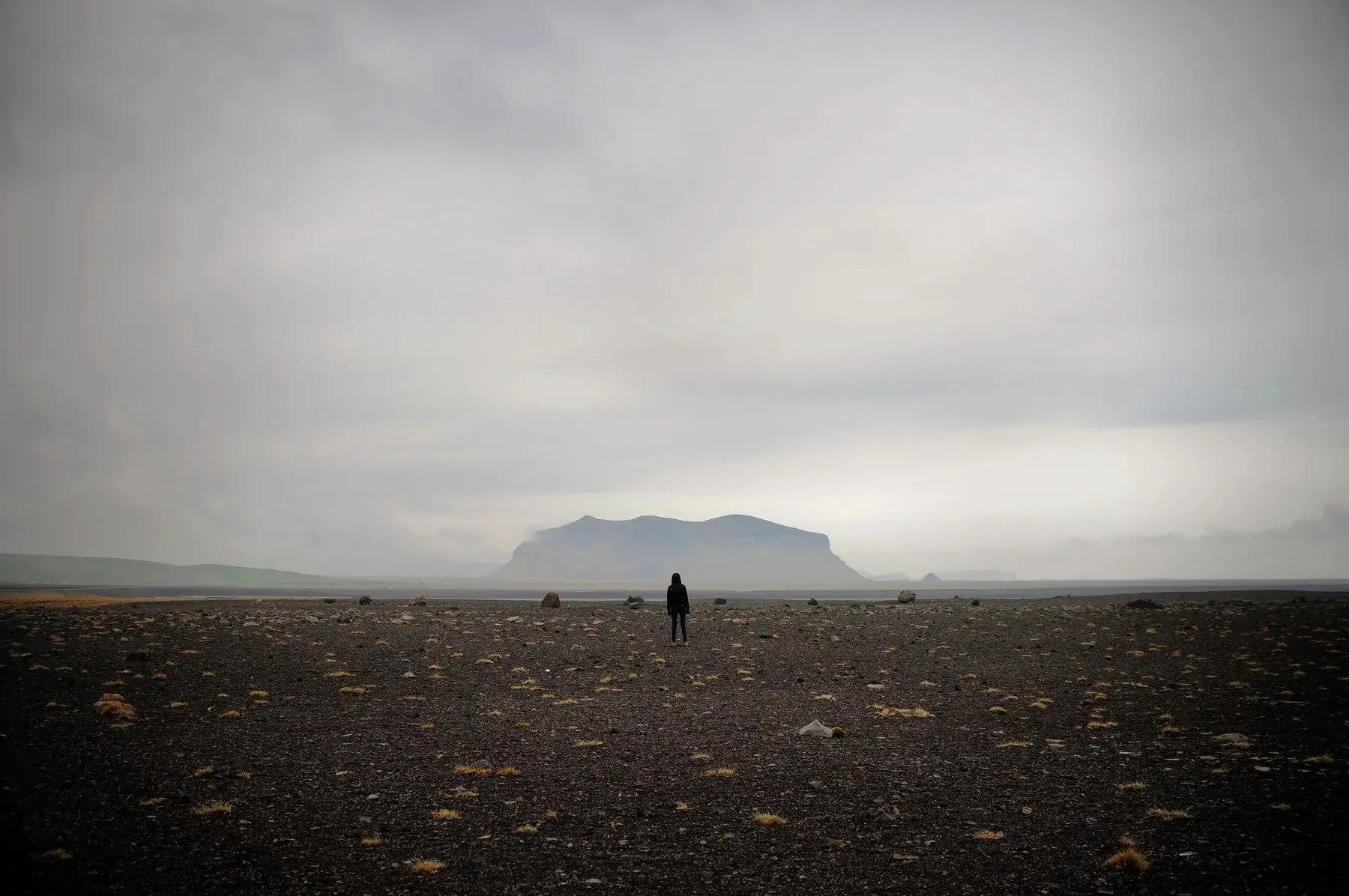
MUSE.TV Interviews
Conversations with artists, creators, and voices shaping today.
Searching for home
The New Single From Tristan Eckerson
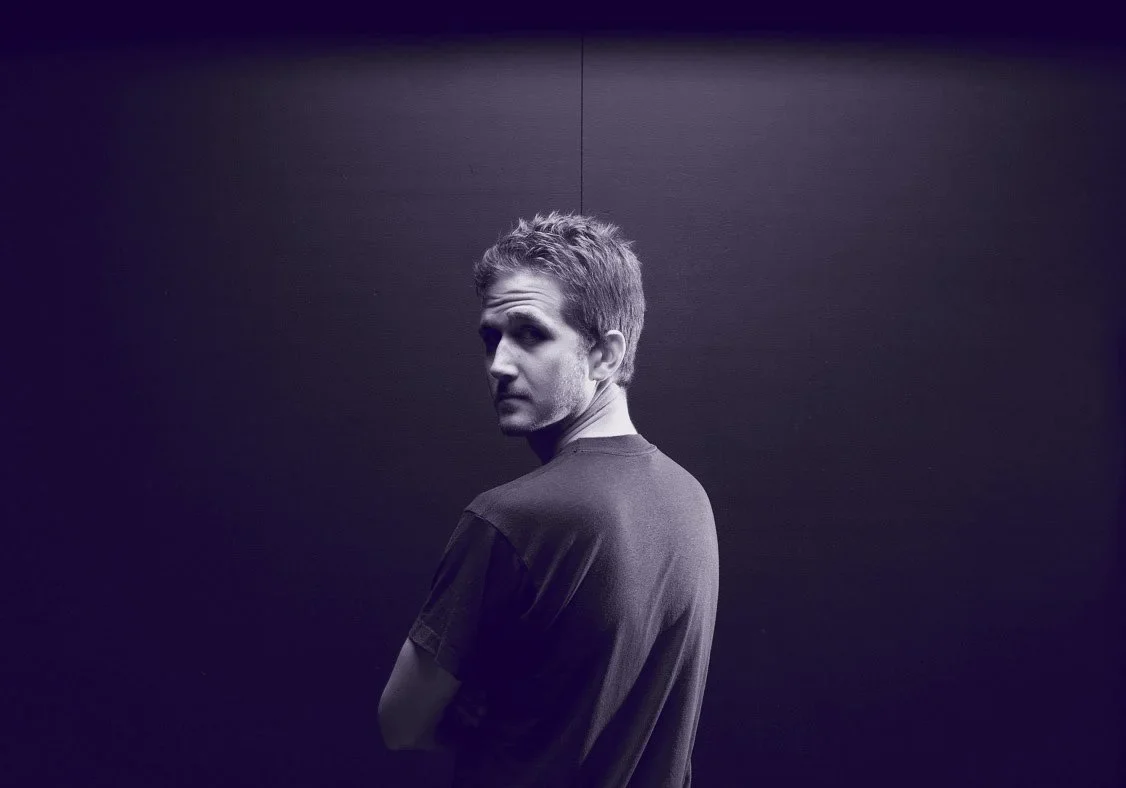
9 Inspirations from Tristan Eckerson
Quote: "Go confidently in the direction of your dreams! Live the life you've imagined." - Henry David Thoreau
I've had this posted where I can see it for a long time now, and it's always inspired me. I've always been really into transcendentalism, and a big fan of Thoreau and Emerson in particular. It seems like a simple message, but I think really following it and believing in it everyday is probably one of the most challenging things to do in life. Being a musician is hard and can involve a lot of negativity and discouragement from others (and from yourself), so I think you really need to visualize what you want in life and remember to do what makes you happy. I try to do this everyday, and that's why this quote has continually inspired me.
Person: Milton Glaser
Milton Glaser is a famous graphic designer that has done work as wide ranging as Bob Dylan posters and the I Love New York logo. He is also the source of another very inspirational quote for me: "Art is work". He has this phrase prominently placed on his office door in New York. He also wrote a book by the same title, and it's basically his entire philosophy when it comes to creating art professionally. His ideas that artists are in fact hard working professionals that deserve to be paid and respected is something that's always been very inspirational for me. There are many stereotypes when it comes to musicians and artists, so I think someone like Milton Glaser is a definite inspiration for a professional artist, whether they are working in music, graphic design, or some other medium.
Place: Steinway Hall in NYC
A picture of the recital venue in New York's Steinway Hall is in eyeline from my desk in my studio. Originally I put it there to inspire me to perform at that recital hall, but it's really become a bigger inspiration than just that singular goal. Just the image of a beautiful piano in a perfect recital hall is inspirational to me on a regular basis. It helps me to visualize the end result of all the work I do with music day in and day out. And of course it's always inspirational to play on a brand new Steinway!
Person: Philip Glass
Philip Glass is an inspiration to me on many levels. For one, his musical abilities and style are a constant inspiration. The way he has been able to take his training and experience and boil that down to a simple stylistic statement across many different areas of modern classical music is very inspirational. But his past and his struggles are also very inspirational. There are some great stories about his life as a cab driver or plumber when living in New York, even when he was premiering his first opera at Carnegie Hall. I think when you hear about those beginnings and then look at the icon he has become in American music, that is very inspirational.
Quote: "Start where you are. Use what you have. Do what you can." - Arthur Ashe
I think there's a lot to be learned from professional athletes when it comes to determination and focus, and Arthur Ashe was certainly no exception. This is another quote that is on my wall and I look at every day. I think in music there's a tendency to look at the big picture of your career as opposed to the little everyday things. And also there's really no road map or formula for music success, so sometimes it can be overwhelming when you don't really have the guidance you think you need, or you don't know exactly what direction in which to go. So this quote just grounds me and reminds me to work on the little things everyday and just enjoy doing it, and that those things will eventually become the big things.
Place: Barcelona
I also have a very large painting of Barcelona in my studio by artist Anthony Pilley. I've lived in and traveled to different parts of Spain many times now, and I'd say it's definitely left a mark on me as a person and a musician. Spanish music, from Flamenco to Granados and Alb niz, and even many contemporary Spanish musicians definitely influence my own musical output. I also love Spanish painters such as Dal and Picasso, and filmmakers like Almod var.
Person: Keith Jarrett
For me there's really no musician that's more important than Keith Jarrett. I've listened to all of his solo concerts more times than I count, and I had the pleasure of seeing him live at the Davies Symphony Hall in San Francisco. He is an amazing, original, and brilliant artist, and I always aspire to be even half as talented and skilled as he is. I love his playing style and his philosophy on music, and I truly admire his skills as a musician.
Quote: "The real voyage of discovery consists not in seeking new lands but seeing with new eyes." - Marcel Proust
I've traveled quite a bit since I graduated high school- you could almost say I've led a fairly gypsy like lifestyle for the past twenty years or so. Right now I'm back in my hometown of Cincinnati with my wife and eight year old son, and I'm really enjoying the idea of staying in one place for a little while. That's why I look at this quote and find inspiration from it. In a way it's kind of a more profound version of the grass is always greener, but I think it goes a little further than that. For me it's even about personal happiness with yourself and your life. Instead of constantly striving for more and never having enough, just try and see things from a different angle that allows you to be happy. That's something that inspires me and something that I work on everyday.
Place: Nature
I'm going to completely sum this one up with my favorite passage from Moby Dick: "Whenever I find myself growing grim about the mouth; whenever it is a damp, drizzly November in my soul; whenever I find myself involuntarily pausing before coffin warehouses, and bringing up the rear of every funeral I meet; and especially whenever my hypos get such an upper hand of me, that it requires a strong moral principle to prevent me from deliberately stepping into the street, and methodically knocking people's hats off- then I account it high time to get to the sea as soon as I can." - Herman Melville
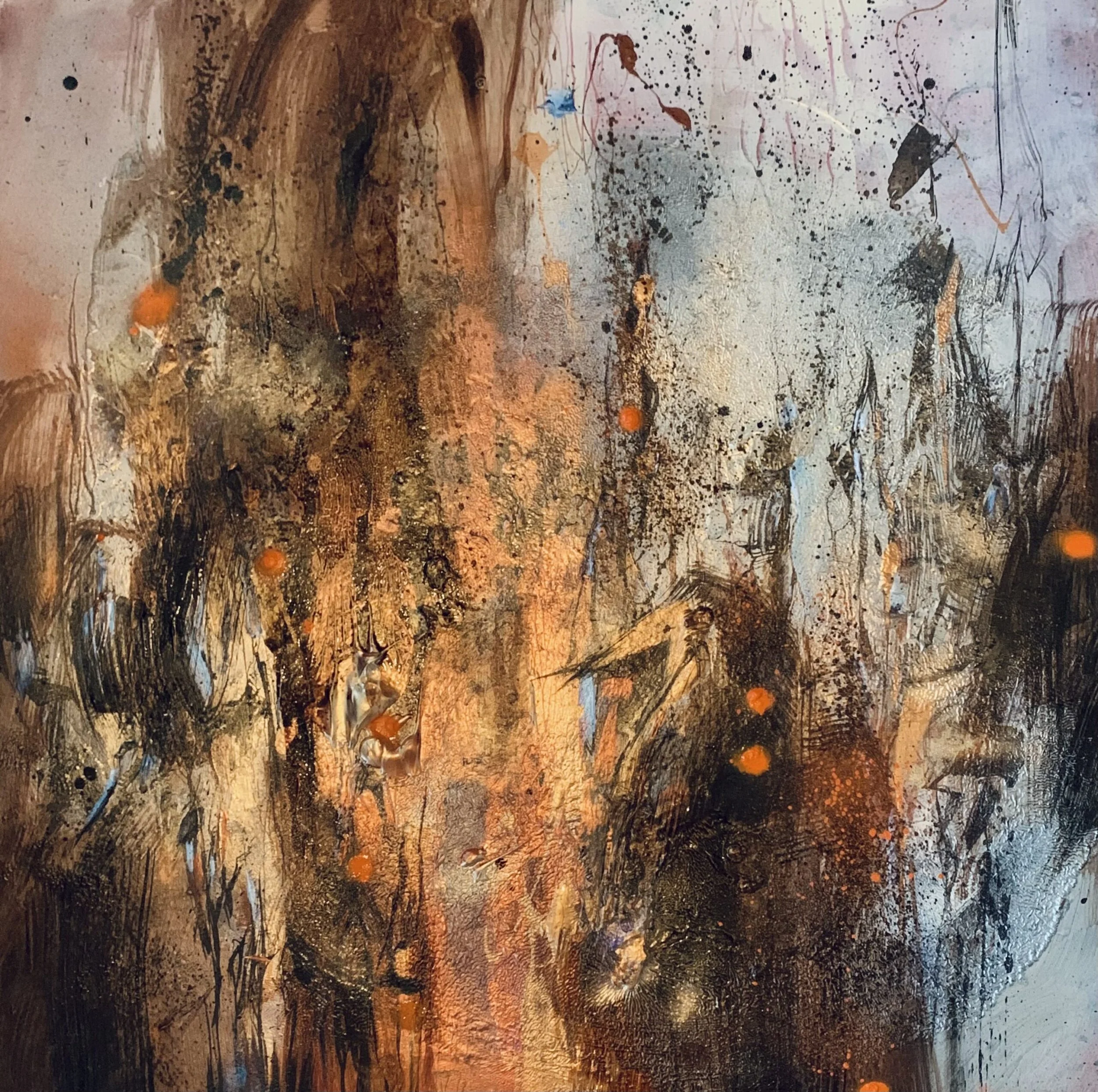
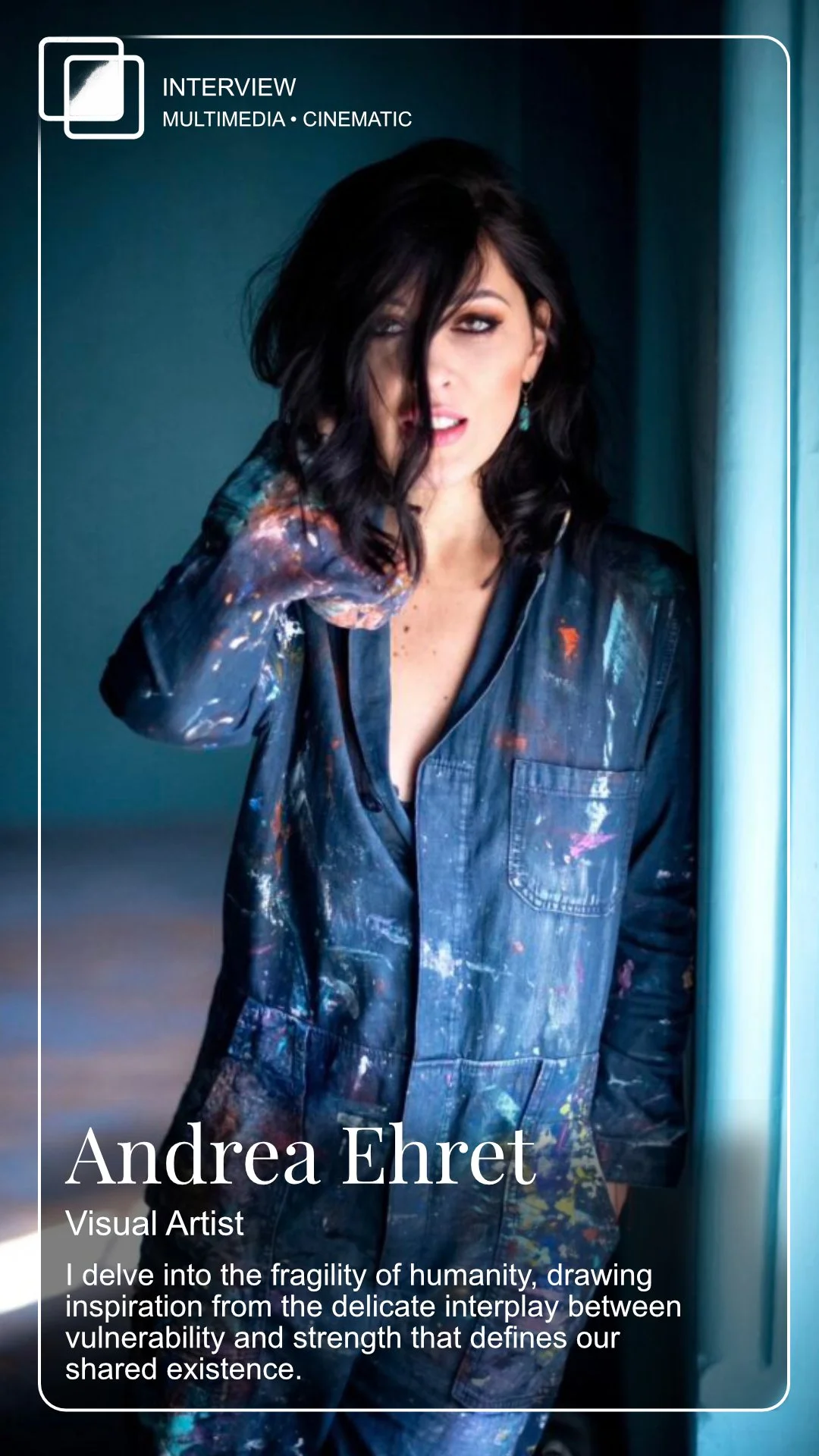
Artist Andrea Ehret

MUSE.TV | Artist Spotlight — About the Artist
At MUSE.TV, we are honored to feature an artist whose work invites us into a profoundly intimate exploration of the human condition. Her practice centers on the delicate balance between vulnerability and strength—an emotional tension that shapes our shared existence and forms the foundation of her creative world.
Her art is deeply rooted in the exploration of femininity: its nuances, its evolving identities, and the layered experiences that define it. Through a contemplative lens, she encourages both herself and her audience to slow down, observe, and be present. This intentional stillness—cultivated in contrast to the speed of everyday life—becomes a portal through which the fleeting nature of our experiences is revealed, cherished, and transformed into beauty.
A signature element of her artistic voice is the incorporation of calligraphy, used not merely as written language but as visual poetry. Each stroke becomes a meditation, a conversation with her own vulnerabilities, and a gesture that translates emotion into form. In her hands, calligraphy is both personal and universal—an expressive thread that bridges identity, memory, and the quiet power of expression.
Her mixed-media works expand upon this intimacy, layering materials and techniques to mirror the rich complexities of human life. These textural compositions remind us that beneath every surface lies a multitude of stories—some whispered, some raw, all deeply human. By grounding her process in awareness, she calls viewers to pause and reconnect with themselves, inviting a shared reflection on the experiences that unite us.
Ultimately, her work is a celebration of fragility—not as weakness, but as a vital source of strength and resilience. Through her art, she encourages us to embrace the delicate, the transient, and the profound, reminding us of the precious moments that shape the fabric of our lives.
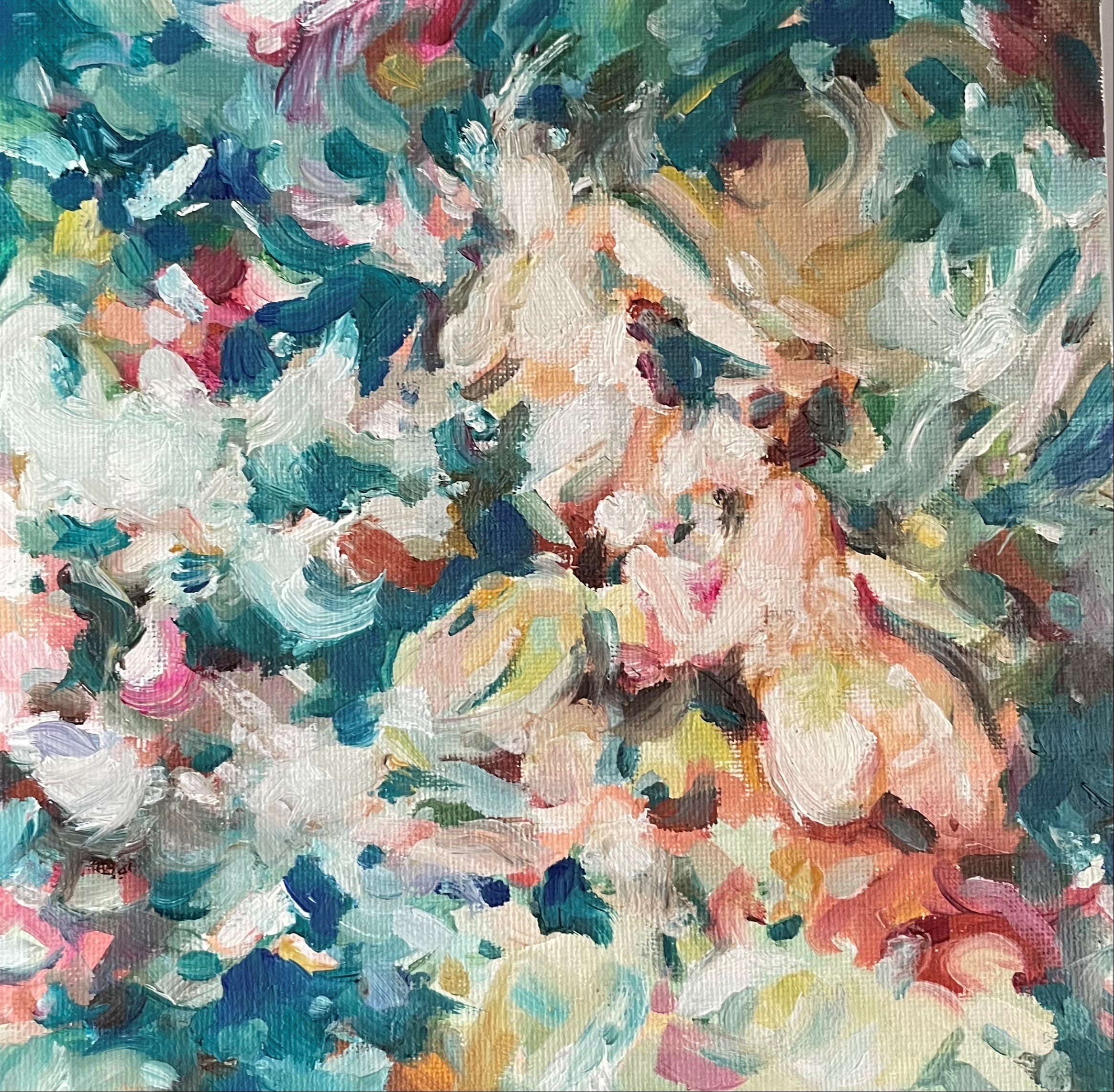
Artist Diletta Innoceni Fagni
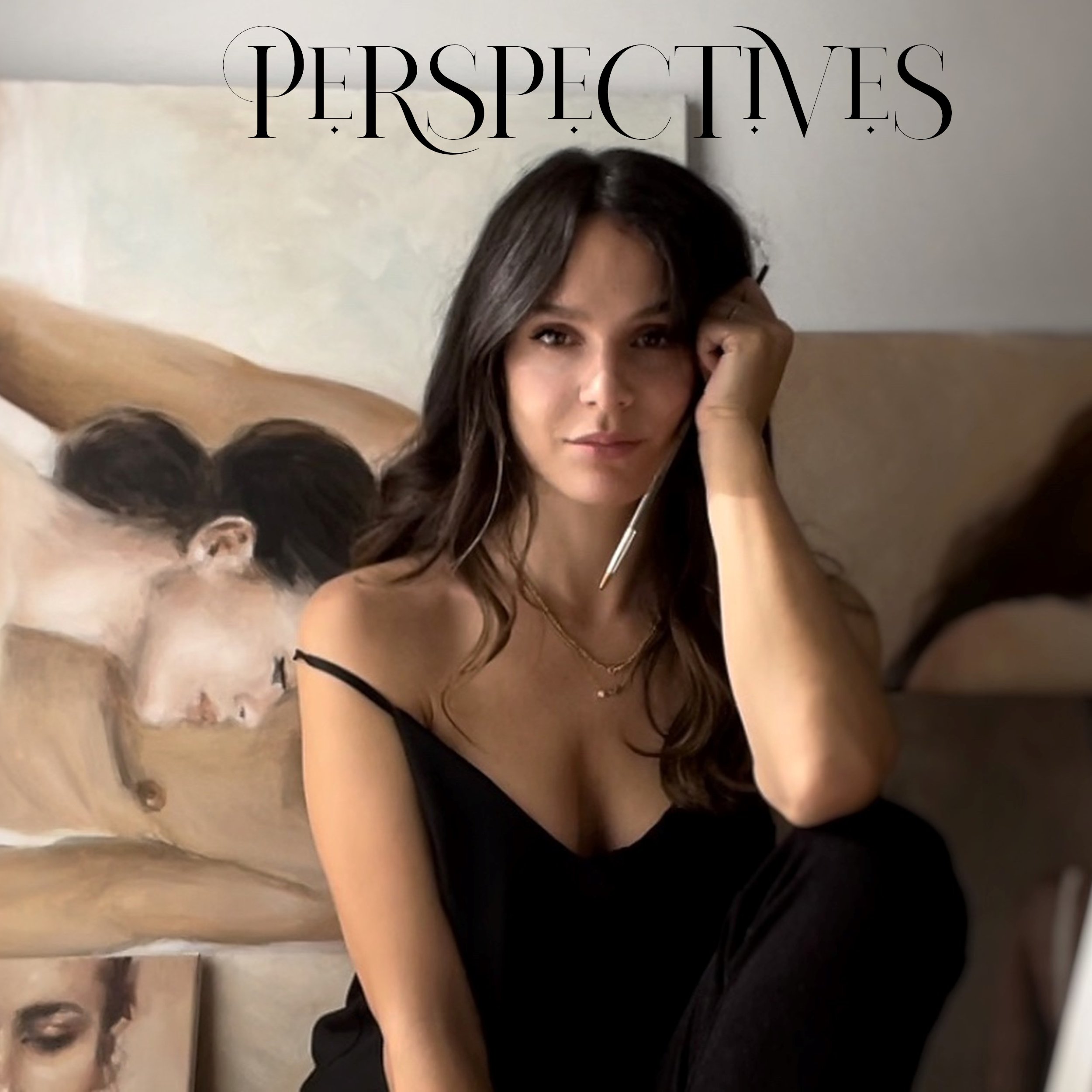


Creative Perspective
Diletta Innoceni Fagni
Artist, Painter, Professional Dreamer
Describe the vibe in your studio?
I don't have a set time to begin, it's inspiration that guides me. Sometimes it can be early in the morning, with the soft, warm light entering my studio windows, dimly illuminating the canvas, other times it happens that I spend the night painting, unable to tear myself away from my work. It's something very intimate and personal, just me and my creation, like a moment of love, accompanied by harmonious light, relaxing music, often classical music.
“I believe that for an artist to have a full and rich soul is their prerogative and a necessity.”
How does living between Rome & Tuscany enrich your work & life?
I was born in Florence, and I have breathed art since I was a child. By moving to Rome I broadened my sense of art even more. Two cities of art par excellence. I often go back to Tuscany, I relax, I try to absorb all the art and culture that surrounds me. Living between Rome and Tuscany lls my soul. And I believe that for an artist to have a full and rich soul is his prerogative and a necessity.
Favorite moments from past exhibitions?
I made my rst exhibition in Florence, and I was so happy to see all my greatest loved ones present. And this is de nitely the best moment of an exhibition. Then of course, that my works are also appreciated.
“I love to use soft, warm and sensual brushstrokes for celebrating femininity of women and the union between nature and the human being in a romantic, delicate and contemporary vision.”
What is your creative process?
Mywork draws on mnemonic images and visual resources as starting points, looking for intimacy, emotions and identity, between present and past, real and unreal. I mostly paint scenes of private moments, seeking the evocative power of images. I love to use soft, warm and sensual brushstrokes for celebrating femininity of women and the union between nature and the human being in a romantic, delicate and contemporary vision.
“It is love, passion, the desire to tell, to tell oneself, to feel free.”
What does a creative perspective mean to you? What is the best thing about being an artist?
For me, being an artist means having a vision and sensitivity towards what one sees, feel and perceives. A need and a desire to express themselves. Something irrational that is difficult to explain. I think it's the art, the artwork itself that can best describe it. It is love, passion, the desire to tell, to tell oneself, to feel free.

Artist Vian Borchert

Nine Inspirations
Artist: Vian Borchert
Website: www.vianborchert.com
Instagram: @vianborchert
Facebook: Vian Borchert Fine Arts
1. Nature:
Nature has always been a great source of inspiration to me, be it the beautiful sunrises that wake us up from our slumber and sleep, or the sunsets that say goodnight till another day. The moons and the stars above allow us to dream upon them. Dreams of expeditions into outer space and future travels into the unknown Universe. Our nature, our world is full of giving, full of love, full of mystery, full of hope. Nature is part of us and we are part of it. Ultimately, nature for me is the mother of all, the mother that keeps on giving unconditionally from its daily bounties and blessings while mesmerizing us with its endless beauty from its rainbows to its forests, oceans and green fields. Nature is for sure a huge source of inspiration for me as a visual artist
2. The Seasonal Changes:
One of the biggest wonders of nature are the four seasons from Fall to Winter, to Spring into Summer. Living and growing up in climates that are affected by the four seasons where one sees the transition from one season into another is definitely a visual feast to an artist. I just had in September and October a solo exhibition in the Washington DC area titled “Autumn Transition” that celebrated the changes that occur from the sweltering hot Summer nights transforming into the crisp air of Autumn as the temperatures fall into Fall. Winter is by far my favorite season to paint. I love the thickness of snow depicted in my Winter Woods’ paintings with the intention of turning these canvases into Winter Wonderlands by creating the illusion as if the viewer is walking into a freshly snowed in forest. I’ve also painted many snow mountains’ paintings that are mainly all sold as soon as they are created, and are on the walls of many art collectors' residences throughout the world.
3. Cityscapes:
I am a city girl, although the countryside does appeal to me in its pastoral panoramic landscapes. Yet, the city with its magnificent architecture holds a special place in my heart like no other. There is a certain fascination in looking up at skyscrapers and discovering amazing architecture that takes one’s eyes up and up to the sky. Cities such as NYC and Chicago for me are something else in regards to their skilled architecture. A walk on NYC’s High Line between minimal edgy buildings designed by the giants of architecture such as Zaha Hadid, Frank Gehry and Renzo Piano, is an absolute exaltation to devoted architecture fans such as myself.
My latest line of artwork has been to bring my love for cityscapes and architecture into my art, while still executing my signature painterly touch that I am known for. In the exhibition “Abstract Gravity” a number of my monochromatic cityscapes were exhibited in a NYC key gallery where my art was praised by renowned art critic and beautifully written about in an acclaimed art review.
4. Art History:
In my art education, I’ve had extensive courses in Art history that greatly contributed to my knowledge in the field. Moreover, I have worked in museums such as the National Gallery of Art and The Phillips Collection Museum both located in Washington DC that furthered my knowledge and got me face to face with the actual master works of the most celebrated artists in history. From Monet to Degas to Diebenkorn and Rothko. I stood there for hours studying their work, every brush stroke, what they felt and how they translated their feelings into their skilled works of art. My favorite pastime till today is to visit museums wherever I am in the world. Also, museums are hubs of great architecture. Museums such as Glenstone museum in the DMV area is a great example of the marriage of architecture and landscaping mixed together in creating a great immersive museum going experience.
5. The Big Blue:
My love for the sea and the ocean inspires many of my works. You see, I was born by the Mediterranean sea. So, for me, the sea, the Mediterranean, is part of my intrinsic making. From its salty sea breeze to its deep azure blue, the sea is in my blue veins so to speak. Therefore, naturally I would create one seascape after another due to my deeply rooted love for the sea which embodies my heritage and my Mediterranean identity. I am nevertheless a lover of all oceans and all seas around the world. On the East coast, I greatly admire the Atlantic ocean and yearly go on vacations by the sea to energize and rejuvenate myself for months to come. For me, the annual trip to the sea is more than just an escape from the day to day noise, but a great source of meditation and artistic inspiration.
The sea from its sandy shores to its squawking seagulls and its special smell all exude excitement and energy like no other.
6. Cinema:
For those who don't know me, I actually studied the history of cinema back in college. For me, cinema from its birth till today has been the same as fine art. The difference between cinema and art, is that art is “still” where cinema is the moving picture – the moving art so to speak. The reason why I have always been fascinated with cinema ever since I was a child is because cinema beyond giving us the emotions and visuals – movies tell a story. Moreover, cinema engages us in so many ways through the film’s production and its editing. Good cinema stems from a visionary director and of course a team pulling it all together to make it work. I still dream about making my own films, and I feel my films upon creation will also revolutionize the art of cinema much like my signature abstracts have resulted in movements and trends within the art world. Good art moves people much like good cinema does. Some of my favorite movies and directors are: “Amarcord” by Federico Fellini, Jean-Luc Godard’s “ À Bout De Souffle (Breathless), A Trip to the Moon (Le Voyage dans la Lune) by Georges Méliès.
7. Birds:
Birds have always been a source of pleasure and joy to me. Ever since I was a child, waking up to the tweeting birds gave me much needed energy for the day ahead. Until today, I open the windows daily in the morning just to hear the birds, and let the fresh air circulate within the rooms. My love for all types of birds from blue birds to seagulls and crows is rather clear in my art teaching and in the projects I cover in my art classes. Throughout my art tearchings, I engage my students in creating artwork from all sorts of subject matters, not only still-life and scenic landscapes but birds of a feather are also a staple in my teaching as well. In my art courses, artwork illustrating birds have been done in pen and ink and in watercolor. Birds, remain a great source of inspiration to me as an artist and as a person who loves to see other beings singing and loving nature and flying freely from one tree to another happily.
8. Flowers and Herbs:
Last Summer, I created works of art that were inspired by my love for my lavender plants. You see, in the beginning of COVID, I had planted lavender plants in my garden and ever since I had seen the plants grow and flourish within my garden amid such a challenging time of living in a pandemic. The resilience and strength of these plants throughout these difficult times of quarantining had given me so much strength. Seeing these delicate purple flowers bloom and fill the air with their aromatic smell brought much pleasure to my heart on a daily basis. The beautiful lavender color had inspired me to create my new lavender hue themed artwork and the “Lavender Fields” paintings’ series that have been widely written about and a source of so many art articles and interviews. I am grateful for all the herbs and flowers that grew in my garden during this time. Their beauty and strength had inspired me so much not only in my work, but also in my life’s journey as well.
9. Poetry:
Perhaps this is one of my more hidden talents, yet poetry has been an integral part of my life for a very long time. As a child, I grew up keeping journals partially as diaries, partially as a sketchbook but mainly to write down my poetry. I have journals over journals full of poetry. Poetry that was inspired from love lost and love attained, melancholy, happiness and hope all affected my poetic voice.
Some of my favorite poets include Langston Hughes, Mary Oliver, Robert Frost, Emily Dickinson, Rainer Marier Rilke and Pablo Neurda.
I end with this poem that I wrote at the end of 2020 with a hopeful look into 2021 titled “Dare to Hope”. Enjoy!
Dare to Hope
By: Vian Borchert
In the heart of all of us
There lays a hope
desiring to be free
from the sadness
from the grim
and the depression
and the wallowing.
This hope is big
This hope is great
This hope will break barriers
and sing
This hope will shine
This hope will bring forth happiness and care
A community of sharing and love
This hope is love
for a bright future
which will be
at our doorsteps
if we allow it to be
if we are allowed to see
our hope within us
For it will take us
flying high
above all troubles
to a nurturing place
a sound place
where love and dreams come true.
Take it, embrace it, love it
for hope will be yours.
• For more about multidisciplinary artist Vian Borchert and her upcoming exhibitions visit: